
Poliomyelitis is an acute infectious disease from the group of intestinal infections, caused by the Poliovirus, which became one of the most feared childhood diseases of the 20th century. Poliomyelitis epidemics have mutilated thousands of people, most of them small children. The disease has caused paralysis and death throughout much of human history.
Transmission
Poliomyelitis is transmitted from an infected person to a healthy individual, most frequently via the fecal–oral route. The disease may present in mild clinical forms (atypical, carriers of the virus) or in severe forms with damage to the central nervous system, resulting in paralytic, spinal, encephalitic variants and respiratory disorders.
In countries with a low level of sanitary culture, the poliovirus is transmitted more often orally or through contaminated hands. In countries with a high level of hygiene, the virus is mainly transmitted by airborne droplets, through coughing, sneezing, speaking, kissing, etc.
Pathophysiology
The poliovirus enters the human body through the oropharynx and digestive tract, where it actively multiplies. It then enters the regional lymph nodes, continues to multiply, and passes into the bloodstream. Through the bloodstream, the virus affects the spinal cord or brain, especially the motor neurons of these organs. All affected cells are irreversibly destroyed, muscles become paralyzed and may eventually atrophy — which characterizes the actual disease.
Paralysis occurs suddenly over the course of a few hours, most often within 48 hours. In severe cases, tetraplegia occurs (simultaneous paralysis of all four limbs) along with impairment of the trunk, abdominal, and thoracic muscles. The paralysis in poliomyelitis is flaccid: the muscles are soft, without tone. Tendon reflexes are weakened or completely absent. Usually, sensory nerves are not affected, and sensation remains normal.
Symptoms
- fever
- headache
- nausea
- pronounced fatigue
- abnormal reflexes
- muscle spasms
Complications
- paresthesia (numbness of body parts)
- meningitis
- paralysis
- permanent disability
- death
Prevention
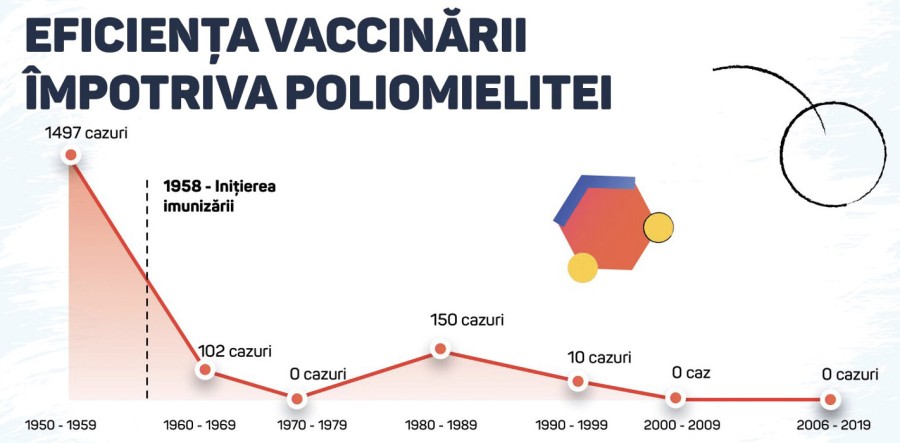
Poliomyelitis epidemics, which left thousands of children and adults paralyzed, gave rise to a “Great Race” to develop a vaccine against this disease.
Two types of vaccines are used worldwide for the prevention and eradication of poliomyelitis: the oral Polio vaccine (OPV) and the inactivated Polio vaccine (IPV). The OPV is more advantageous, as it is administered orally and is less expensive. It also creates intestinal immunity against the poliovirus. When used in mass campaigns, OPV colonizes the intestines of children, blocking the circulation of the wild poliovirus.
It should be noted that OPV is also the vaccine recommended by the World Health Organization. It is widely used in the prevention and eradication of poliomyelitis in the Republic of Moldova.
Eradication
Only regular vaccination of children, with coverage of more than 95% of all children, can ensure the complete eradication of poliomyelitis and significantly reduce the number of adverse effects after the disease.